
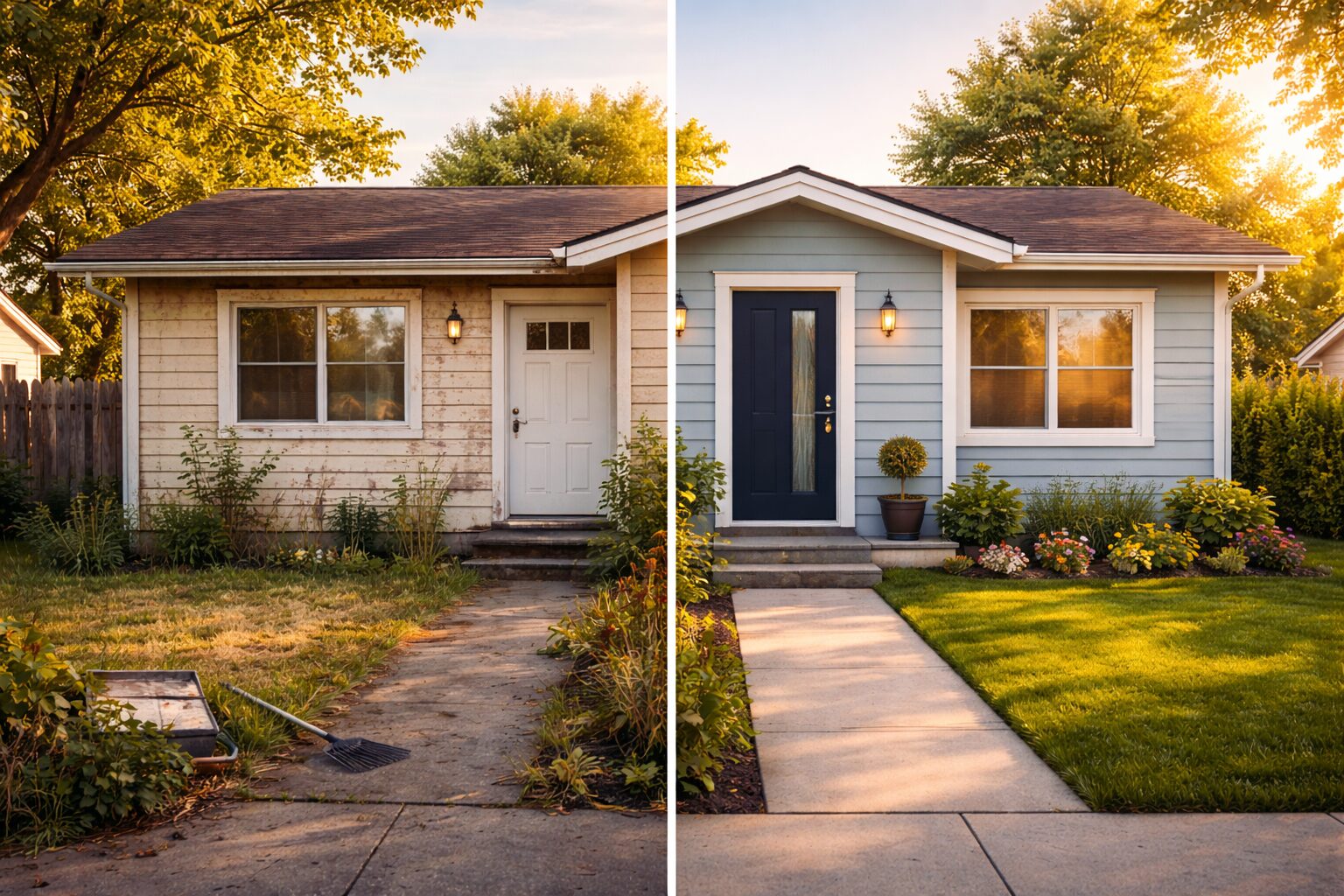
Fix n’ Flip 101: A Complete Beginner’s Guide (2026)
Fix-and-flip is one of the fastest ways to make money in real estate—and one of the fastest ways to lose it—if you skip planning, budgeting, or timelines. A successful flip is basically a simple business: buy right, renovate smart, sell fast, and manage risk.
This complete beginner’s guide shows you the full process step-by-step, plus image prompts you can use for your blog visuals.
What Is a Fix-and-Flip?
A fix-and-flip is when you:
- Buy a property below its potential market value (usually because it needs repairs),
- Renovate it to improve value,
- Sell it quickly for a profit.
Flipping profits come from buying right—not from renovating beautifully.
Who Should (and Shouldn’t) Flip Properties?
Flipping is good for you if you:
- Can manage contractors and timelines
- Like project management and negotiation
- Can handle unexpected costs
- Have enough cash buffer (very important)
Flipping is risky if you:
- Need guaranteed returns
- Don’t have time to supervise work
- Get stressed by delays and surprises
- Have no emergency funds
The Fix n’ Flip Formula (Beginner Version)
A simple way to think about the deal:
Profit = ARV – (Purchase Price + Renovation + Holding Costs + Selling Costs)
Where:
- ARV (After Repair Value) = what the home will sell for after renovations.
If your numbers don’t work on paper, they won’t work in real life.
Step-by-Step Fix n’ Flip Process
Step 1: Pick the Right Market and Neighborhood
The best flips happen in neighborhoods where:
- Homes sell quickly (strong demand)
- Comparable properties (“comps”) are easy to find
- Renovations match what buyers already want
Look for:
- Stable or rising prices
- Good schools / amenities / transportation
- Low crime and strong resale activity
Avoid areas where properties take a long time to sell—holding costs will eat your profit.
Step 2: Find the Right Type of Property to Flip
Beginner-friendly flip properties typically have:
- Cosmetic issues (paint, flooring, kitchen upgrades)
- Minor repairs (fixtures, doors, landscaping)
- No major foundation/structural disasters
Avoid for your first flip:
- Severe structural damage
- Legal/title complications
- Flood/fire damage unless you’re experienced
- Properties with major zoning issues
Step 3: Estimate ARV (After Repair Value) Correctly
ARV is the backbone of flipping.
To estimate ARV:
- Find 3–6 comparable sold properties within the same area
- Match size, condition, layout, and features
- Prefer sales within the last 3–6 months
Common beginner mistake: Using “listing price” instead of “sold price.”
Step 4: Build a Renovation Budget (With Buffers)
Break the renovation into categories:
- Demolition & cleanup
- Plumbing & electrical
- Flooring & paint
- Kitchen and bathrooms
- Doors/windows (if needed)
- Landscaping & curb appeal
Add a contingency buffer:
- Light rehab: 10%
- Moderate rehab: 15–20%
- Heavy rehab: 20–30%
If your renovation estimate is $10,000, plan for $11,500–$12,000.
Step 5: Calculate Holding and Selling Costs
Even if you renovate well, you lose money if you hold too long.
Holding costs include:
- Loan interest (if financed)
- Utilities
- Insurance
- Property taxes
- Security/maintenance
Selling costs include:
- Agent commission (if applicable)
- Closing costs
- Staging/marketing
- Repairs requested by buyer after inspection
Step 6: Follow a “Buy Right” Rule (Beginner-Friendly)
Many flippers use formulas to avoid overpaying. A simple safe approach is:
Don’t pay more than:
ARV – (Renovation + All Costs + Desired Profit)
Your desired profit should be high enough to justify risk, time, and surprises.
If the deal only makes a small profit on paper, it’s probably a no in real life.
Step 7: Financing Options for Beginners
Common ways to fund a flip:
- Cash: simplest and fastest
- Bank loan/mortgage: slower approvals, strict rules
- Hard money loans: faster, higher interest
- Private lender: flexible if trust exists
- Partnership: one brings money, other manages flip (use a legal agreement)
Beginner tip: Avoid over-leverage on your first flip. Use conservative financing.
Step 8: Renovate Fast, Not Fancy
A flip should appeal to the average buyer—not your personal taste.
Focus on high-impact improvements:
- Fresh neutral paint
- Updated lighting and fixtures
- Clean, modern flooring
- Kitchen refresh (countertop + cabinets + hardware)
- Bathroom refresh (vanity + mirror + shower fittings)
- Strong curb appeal (front door, landscaping, exterior lighting)
Avoid luxury upgrades unless the neighborhood supports luxury prices.
Step 9: Manage Contractors Like a Project (Not a Wish)
To keep costs under control:
- Get multiple quotes
- Use a written scope of work
- Set milestone-based payments
- Keep daily/weekly progress checks
- Track every expense
Payment rule: Never pay 100% upfront.
Step 10: Sell Smart (Speed Matters)
Your goal is a fast, clean sale.
- Price based on comps, not emotions
- Use high-quality photos
- Make the home feel bright, clean, and move-in ready
- Fix inspection issues early if possible
Time kills flip profits. Speed = money.
Beginner Mistakes That Destroy Profits
- Buying without verifying ARV from real sold comps
- Underestimating repairs (especially plumbing/electrical)
- No contingency budget
- Delays from poor contractor management
- Renovating too “premium” for the area
- Overpricing and sitting on the market
A Simple First Flip Strategy (Recommended)
Start with a cosmetic flip.
A property that needs paint, flooring, fixtures, kitchen refresh, and curb appeal—nothing structural.
These flips are:
- Faster
- Easier to budget
- Lower risk for beginners
Fix n’ Flip Checklist (Quick Summary)
✅ Find a property below potential value
✅ Estimate ARV from recent sold comps
✅ Budget renovations + contingency
✅ Add holding and selling costs
✅ Buy only if profit is strong on paper
✅ Renovate fast with a clear scope
✅ Sell quickly at market-supported price
Conclusion: Is Fix n’ Flip Worth It in 2026?
Yes—if you treat it like a business. A flip is not a renovation hobby. Your success depends on:
- Buying below value
- Controlling rehab costs
- Finishing fast
- Selling with strong pricing and presentation
If you want, tell me your target city and budget range, and I can create a deal calculator checklist (ARV + rehab + holding + selling + profit) you can use for every flip.